If we find you’re non-compliant with the Standards and/or legislation during a performance assessment, we’ll notify you about our findings, any decisions made as well as the next steps.
Guiding providers to return to compliance
We have a dedicated compliance team that engages with you when there are non-compliant findings at the conclusion of a performance assessment.
Your performance assessment report, or statement of reasons, will outline our findings about your compliance against the relevant standards and legislation and we will give you options to respond to us and demonstrate that you are actively addressing the issues.
Compliance Resolution
ASQA uses a compliance management process to support providers to return to meeting their obligations and reduce risk to students. This process is comprised of a tiered pathway structure. In some instances of significant non-compliance, ASQA may seek to cancel a provider’s registration.
What are the Compliance Resolution Pathways?
If non-compliance is identified during a performance assessment you may be given the opportunity to rectify the issues within a 20-day rectification period. If non-compliance remains after this period, the performance assessment is closed, and you will enter a compliance resolution pathway.
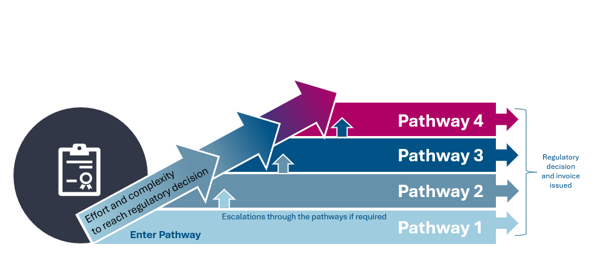
Providers commence at Compliance Resolution Pathway 1 and as the level of regulatory effort and complexity involved in reaching a regulatory decision increases, the provider moves up the pathway. ASQA may make a regulatory decision at any time throughout the pathway process.
What is an Agreement to Rectify (ATR)?
We recognise that most providers are committed to and capable of delivering quality training and will be continuously reviewing their performance and taking action to ensure ongoing compliance.
Where this is the case, we are likely to give you an opportunity to rectify identified non-compliance through an ATR. An ATR is a plan that may be offered during a Compliance Pathway that commits you to take action to address areas of non-compliance, where you may need more time to make systemic and sustainable changes to ensure ongoing compliance. You may have up to 3 months to take the actions as set out in your plan to return to compliance.
When will I be offered an ATR?
If ASQA advises that you have commenced a Compliance Resolution Pathway you may be offered an Agreement to Rectify (ATR).
We will advise you if we consider an ATR to be an appropriate option and will take into account a number of factors, including:
- the nature and impact of the non-compliance
- your conduct and understanding of the problem
- your commitment to continuous improvement
- your willingness to take action to ensure the solution is effective and sustained.
What happens with my ATR?
The ATR must include an explanation of the cause for the non-compliance; detail the actions you intend to take to address the identified non-compliances and list the evidence of compliance you will be submitting at the conclusion of the ATR to confirm you have taken those actions.
We will review your proposed ATR to ensure you have understood the causes of the non-compliance and that the actions you plan to take cover all aspects of the identified non-compliance.
We will decline the ATR if we are of the view that you will be unable to return to compliance with your proposal.
Compliance pathway progression
If a return to compliance is not achieved as expected in Compliance Pathway 1, and a sustained level of regulatory effort is required by ASQA to continue working with you towards a regulatory decision, you may progress to the next tier (pathway 2), and so on (pathway 3, then pathway 4), or ASQA may make a regulatory decision and finalise the compliance resolution process. In some instances, ASQA may commence a provider on pathway 2 or higher, depending on the nature and effort involved in overseeing the non-compliance.
Submitting clear, relevant evidence and showing a genuine commitment to compliance will support efficient resolution and help avoid higher costs associated with pathway escalation. Where large packages of irrelevant materials are provided to ASQA this extends the resolution process. Providers should ensure that they understand the non-compliance issues, work productively to resolve them and provide appropriate evidence of compliance to show that they have been rectified in a sustainable way.
At the end of the compliance resolution process, you will receive an invoice based on the pathway undertaken.
Related links
- Risk-based regulation
- Performance assessment
- Outcome Standards 2025
- Compliance Requirements 2025
- National Code of Practice for Providers of Education and Training to Overseas Students 2018
- ELICOS Standards 2018
- Guide to rectifying non-compliance
- Guide to submitting evidence to ASQA
- Current fees and charges
On this page